
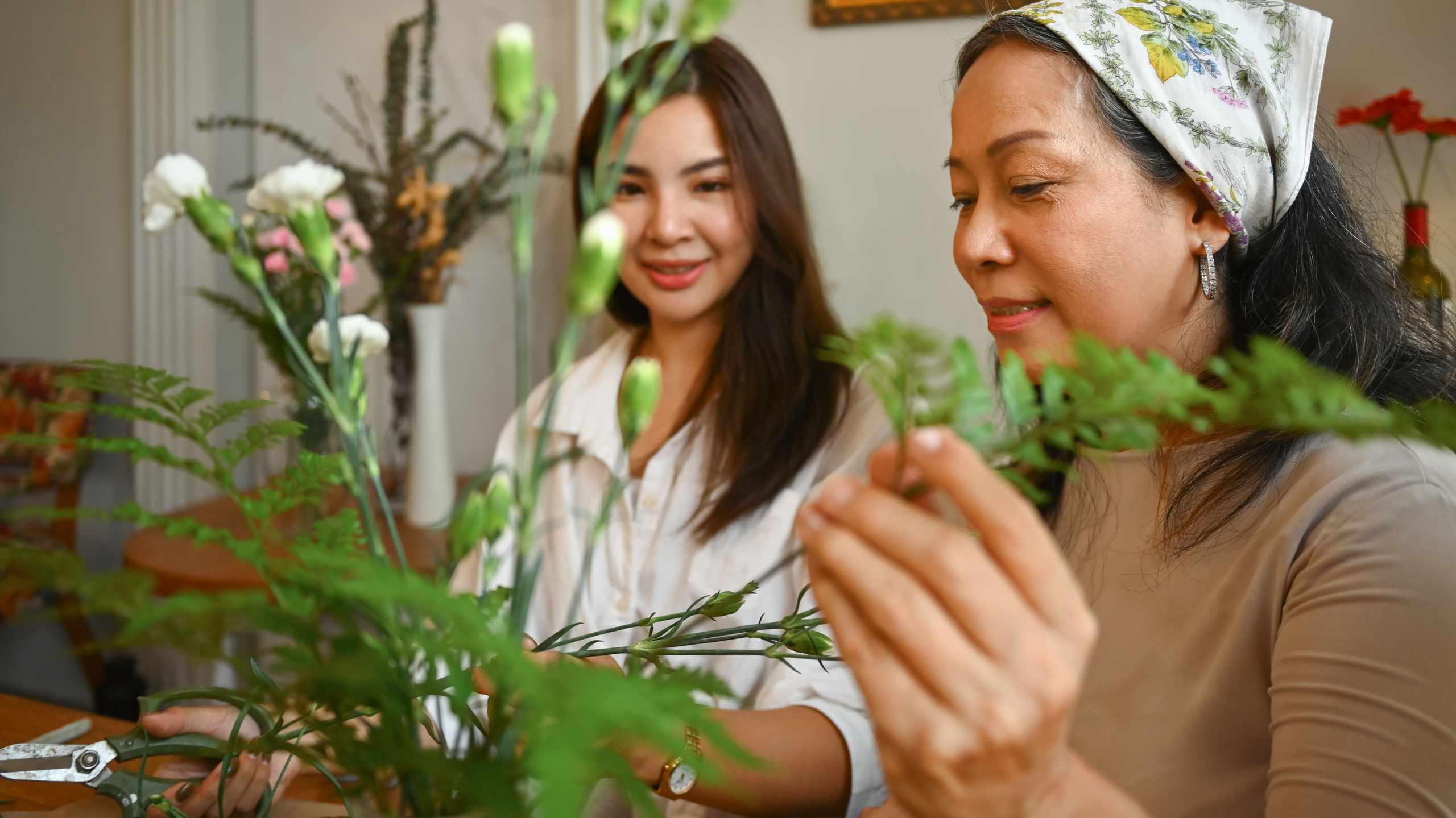
The stems matter long before any flowers touch the vase. Stems with remaining leaves dirty the water, and stems with dry ends have harder time drinking. Stems with crushed or careless cuts have a shorter freshness period. These are not floral embellishments; they are the basics for how a stem and any arrangement behave.
The stem preperation begins with close observation. You can lay fresh cut flowers on a work space, and sort them into focal flowers, supporting blooms, filler stems, and greenery. This does not just sort flowers by shape or form, it helps you identify weak petals, damaged stems, leaves on the lower stem, and any leaves that will go below the water line. By sorting stems before any design work, a slow down will help in other ways.
Any leaves on the stem below the water line need to be removed. They will break down, and make the vase water cloudy. Only remove the lower leaves and foliage that you need, keep the upper leaves to use for arrangement if you need them. It will also help with holding them steady when practicing turning bouquets or finding a good tie point.
Make a fresh, clean cut at the end of each flower, as that is the surface that the flower uses to drink from. Use florist scissors or secateurs that make a clean cut, rather than squeezing the stem. Cut a bit off of all stems before they go into the water, especially if they have been dry for some time. Do not cut the stems to their final height at the start. Keeping stems longer allows you to explore the right vase, the focal flower position, and the height of a design.
As a small stem preparation activity, get five stems, and prepare them. Remove any lower leaves, trim a fresh cut on all stems, put the stems in a clean vase of water, then step back and observe. Which looks like a focal flower? Which has more supporting flower potential? Which greenery has good shaping? Before moving on, look at how your eye works, before your hands have busy work.
Many unbalanced arrangements result from moving past the preparation phase and trying to balance everything at once as you start building. You may end up with overcrowding, awkward crossed stems, and even leaves caught in the stem tie point. Preparation is not about creating a hard step or making the design more complex. It is about making your design life simpler, before those little issues find a home in your arrangement.
You may see the benefits of stem preparation in small ways. The vase stays clear longer, it is easier to find your flowers at the right height and angle, and you can rotate bouquets without leaves catching between your stems the next time you build a design or struggle with a vase. Look down to your stems when you add in the next flower, and you may find that your struggles do not have much to do with the flowers, but more to do with the fact that your stem has not had the attention to prepare it.