
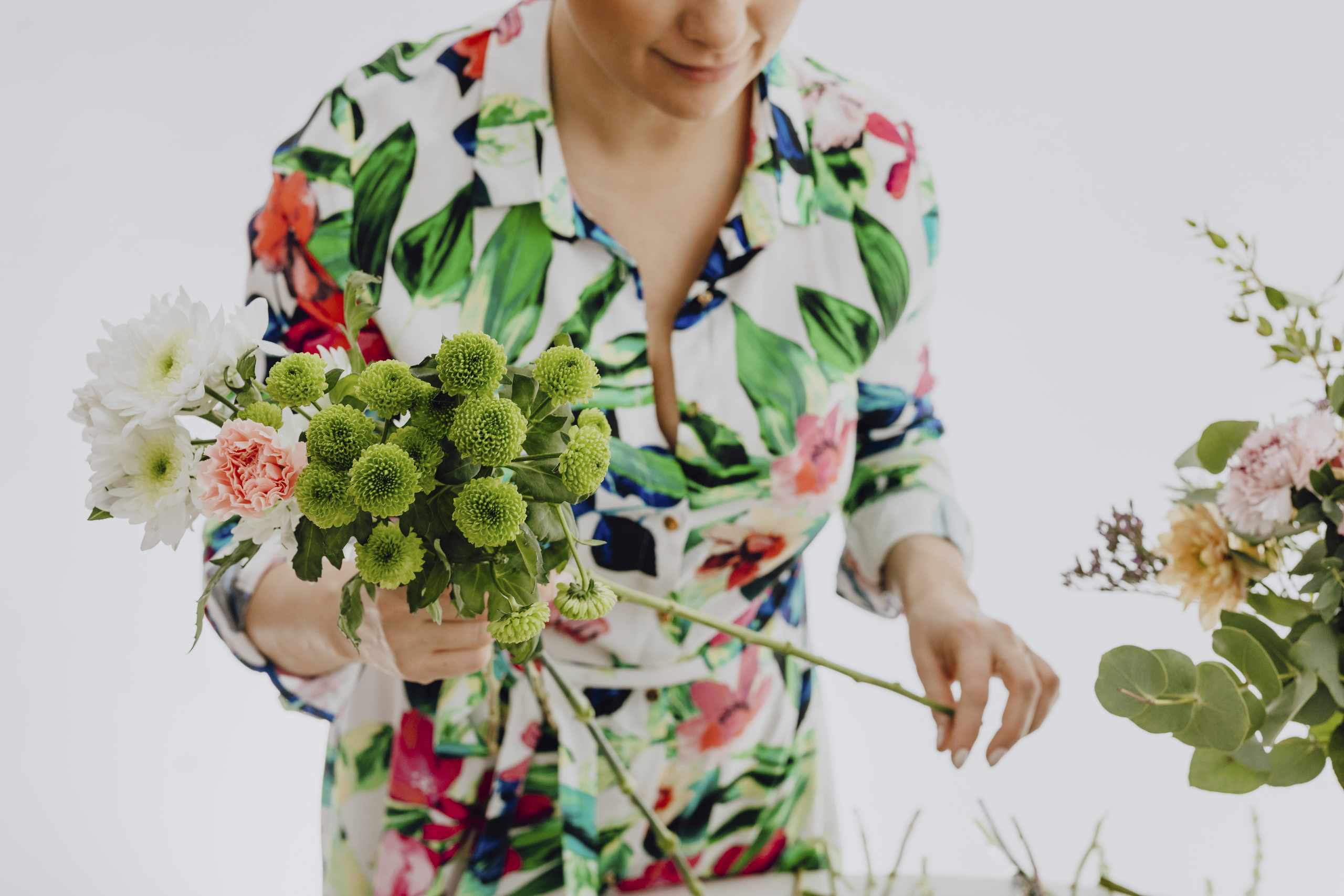
Before the outline of a bouquet is finalized, a color combination can render a small arrangement to appear peaceful, chaotic, airy, vibrant, harmonious, or chaotic. A novice arranger may find each individual flower visually appealing when looked at in isolation, only to discover that when assembled together, the result has a difficult time conveying a unified visual message. In these situations, the issue is not the flower selection per se, rather that the arrangement is using too many colors which compete to be the “dominant” one.
One method for establishing a foundation when arranging is choosing the primary color first, before selecting the other flowers. It does not need to make up the majority of the bouquet (in fact that can become repetitive or flat), but it sets the “mood” for the arrangement, which could be soft pink, warm yellow, deep red, or even a neutral cream, or a vibrant purple; choose one that is easy to identify. Once you have determined your primary color, you can pick supporting flowers and filler stems based on if they work with or against your main color selection; this one decision will significantly de-clutter your options on the flower table.
For starters, try to work with only two strong colors with one subtle neutral. A sample combination could include peach and cream with green leaves, or a purple/white combo with softer filler stems and leaves. The neutral color in your palette is important, as it acts as a visual break for the eye. Seasonal greenery in the bouquet can also work to cool down a vibrant color combination, provide a light backdrop to a pale bouquet, or help to break up a color that is almost the same.
Color also interacts with the texture (size of bloom) of the flower. A larger, statement flower will carry more visual weight than a filler flower. A loose filler flower can soften a vibrant bouquet; or too many bold colors in a compact bloom will create a dense and “heavy” color palette. When selecting individual stems to place in a bouquet, you need to consider both the color and bloom size when creating the visual effect. A limited amount of a strong or vibrant color can be effective if you pair it with a larger or more textured flower shape.
Lay the flowers you are planning to use on a large surface prior to starting the actual arrangement. This gives a better vantage point to see the colors as you select them. Start with your focal flower(s), then lay down the supporting blooms, next the filler stems, and lastly, the greenery or leaves that are included. Step away from the flowers (and turn your back to it, if you’re working at a table) as if it were a bouquet before picking them up to arrange. Does your eye have too many visual “stops”? Remove a color or scale it back and let another color become a focal point. Does the arrangement lack contrast? Add contrast through a lighter colored flower, deeper shade of green, or a color shift in texture rather than adding additional colors.
Starting with your first color, work through the remaining flowers as your color palette evolves. When your palette is established, continue the primary color through the arrangement by placing the focal flower and then the secondary colors. While working the flowers around into place, keep checking the arrangement and adjust as needed, and use the flowers to help build the shape; if one side of the arrangement gets too “bright” add additional foliage, a lighter color flower in the filler section, or shift the flower position (lower down the side of the bouquet). In short, try to keep the color combination of the arrangement in sync with the shape, height of stems, and focal placement.
A more subdued palette is not any less creative. In fact it might be easier to focus on stem cleaning, bouquet rotation, stem separation and balancing while still practicing your new arrangement skills. Next time you are flower shopping, remove a beautiful flower from the bouquet selection to see if the overall result will be more pleasing without it; you might be surprised at how much more cohesive your color palette becomes.